

Headache and Migraine Relief in North Chesterfield VA
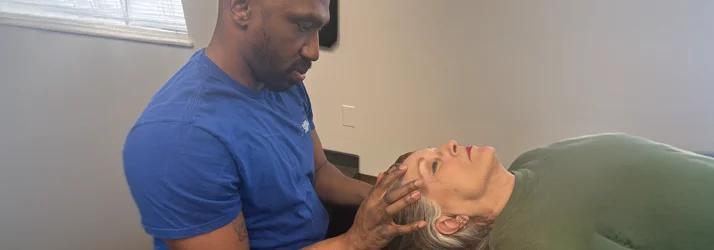
I want to be upfront about something: migraine is a complex neurological condition, and I'm not claiming chiropractic care cures it. What I am saying is that a significant percentage of migraine patients have an upper cervical dysfunction that is either driving their migraines or making them worse, and that component has often never been evaluated. When we correct it, many patients see their migraine frequency drop.
For anyone looking for a migraine and headache chiropractor in North Chesterfield VA, the results we see are encouraging. Some see their migraines become less severe, and a few find their medication becomes far less necessary. It doesn't work that way for everyone, but it works often enough that if you've had chronic migraines and haven't had your cervical spine properly assessed, it's worth doing.
What the upper cervical spine has to do with migraines
The C1 and C2 vertebrae at the very top of your cervical spine have a direct neurological connection to the trigeminal nucleus caudalis, which is the brain structure most central to migraine processing. When those upper cervical segments are restricted or misaligned, they generate chronic afferent signals into the central nervous system that lower the threshold for a migraine to trigger. In plain terms, the neck dysfunction means it takes less to set off an episode.
There's also the question of cervicogenic headaches, which are head pains that originate from the neck itself rather than from a primary neurological event. These are commonly mistaken for migraines because the symptoms overlap significantly. Unilateral head pain, nausea, and light sensitivity can appear in both. A thorough cervical evaluation can help clarify how much of what you're experiencing has a mechanical driver.
This is also why I see patients come in having been told they have migraines for years, tried multiple medications, and found that once their cervical spine is properly assessed and treated, the pattern changes. Not always. But often enough to matter.
How we approach migraines at The ChiroSolution in North Chesterfield VA
Every migraine patient starts with a full consultation, INSiGHT neurological scans, and a physical examination that includes careful evaluation of the upper cervical spine. The scans measure thermal and EMG patterns that often reveal significant asymmetry and stress in the upper cervical and suboccipital region even when patients don't report neck pain. That asymmetry is meaningful data.
Treatment focuses on restoring normal mechanics to the upper cervical segments using Advanced Biostructural Correction, a gentle, specific technique. I also do soft tissue work on the suboccipital muscles at the base of the skull, which are intimately connected to the C1 and C2 levels and carry the trigger points most associated with headache referral patterns. Postural correction, particularly addressing forward head posture, reduces the chronic mechanical stress that maintains elevated neurological sensitivity in the cervical region.
I track migraine frequency and intensity with each patient using a simple headache diary approach. Progress is measurable. If after a fair course of care we're not seeing the nervous system changes we'd expect, I'll tell you that directly and talk about what other avenues make sense.
A realistic picture of what to expect
Some patients see a significant reduction in migraines within the first month of consistent care. Others see gradual improvement over two to three months as the nervous system stabilizes and the cervical pattern changes. And some find that while their migraines don't fully resolve, the episodes are less frequent, shorter, and easier to manage with less medication.
I'm not going to promise you a specific outcome before I've seen your scans and done your exam. What I can promise is an honest assessment of whether I think chiropractic care can help your specific situation, and if I don't think it can, I'll tell you that too. Call us at (804) 336-3100 if migraines have been running your calendar in North Chesterfield VA.
Book Your
Discovery Visit
Existing Patients
Text Us Here: (804) 336-3100
to Schedule An Appointment

The ChiroSolution
301 Southlake Blvd #101
North Chesterfield, VA 23236